
Why are role play centres important for children with SEND
Role playing is a vital part of every child’s early years learning. It’s a fundamental way of enhancing important skills that are required for a child’s healthy development. Pretend and imaginative play creates opportunities for these essential skills to grow. Children with special educational needs and disabilities need the right learning environment to have the opportunity to thrive and learn through role playing.
Children with SEND at Tiny Town
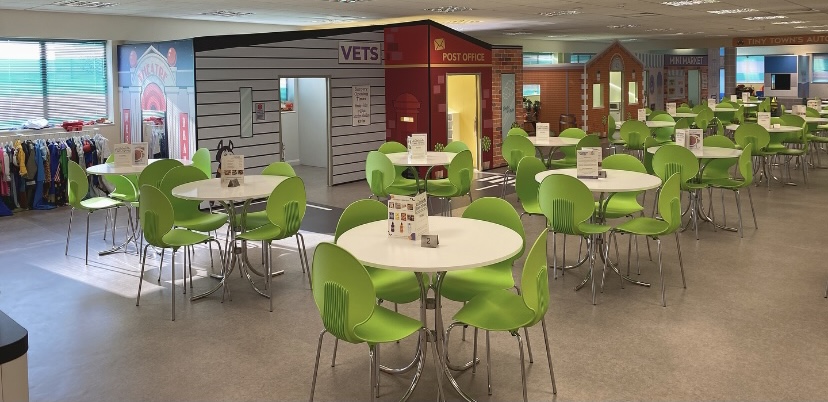
Our Tiny Town Play Centre is a place where any child can learn and develop through role play. We are inclusive to children of any ages and abilities. This is because every child grows and develops at their own pace, we aim to create an environment where every child feels confident and comfortable to play. Additionally, we also want parents to feel relaxed knowing their little ones are playing in a safe environment and confident in letting their little ones go and explore by themselves, creating their independence. Our Tiny Town role play centre is a friendly and accommodating place where children with special educational needs and disabilities have the opportunity to learn through imaginative play to grow and discover the world around them.
The benefits of role play centres for children with SEN
All children use role play to learn and develop. Play can support the specific difficulties your child may face. Many child therapists use role playing to help children who are experiencing difficulties, and can even be used to help children who have special educational needs such as Autism Spectrum Disorder and Attention Deficit Hyperactivity Disorder.
Creative thinking and imagination
Role playing is an excellent way to develop a child’s creative thinking and imagination skills. During role play, children will engage in situations where they will have to pretend and imagine – this could be developing new ideas or solving problems. Cognitive thinking and creativity are linked to role playing and children will be playing using their imagination at an early age. At our Tiny Town role play centre we have lots of different themed areas that can spark a child’s imagination. For example, a mini-market shop, a house, a vets, children’s hospital, theatre, salon and many more!
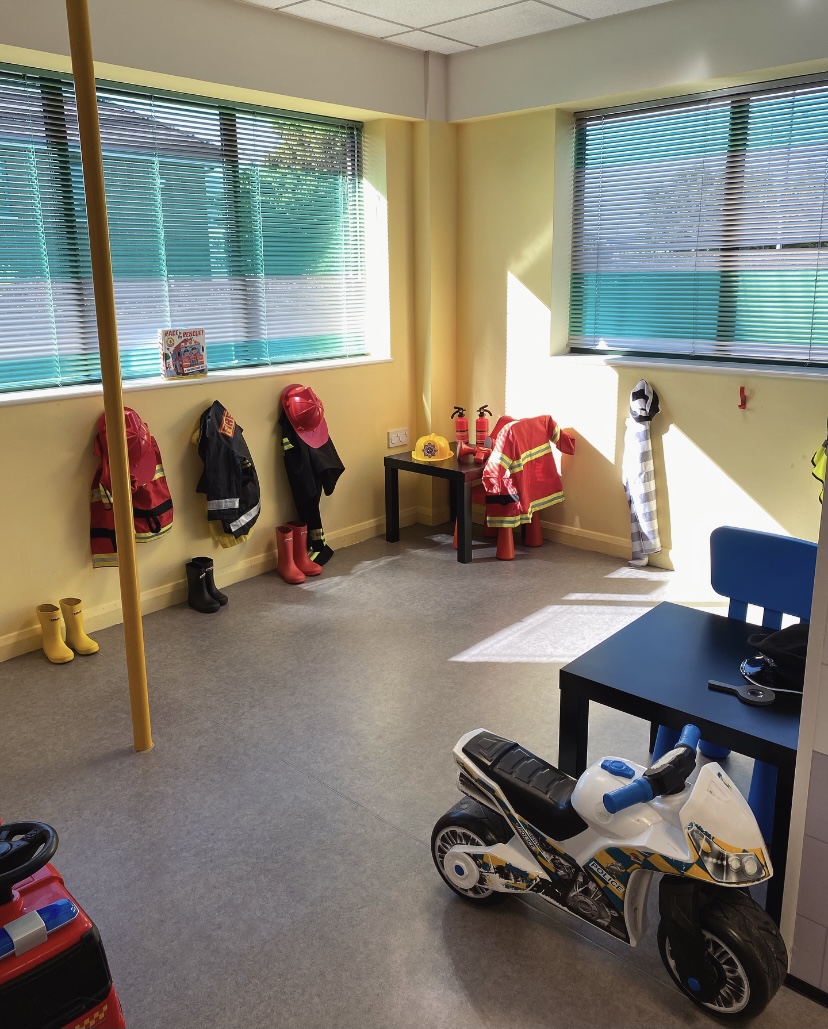
Children can use their creative thinking and imagination skills to grow and discover the world around them. As our Tiny Town role play centre is a mini-village built on real life scenarios, children get the opportunity to learn about the world, different people and communities. Young children will be learning to identify and describe people with different jobs. Children can demonstrate this by role playing and pretending to become different people at Tiny Town – post person in the Post Office, policeman from jail, a firefighter, shop keeper and many more. In imaginative play, children can talk about the role of these people, engaging in conversations that are similar to real world situations. Communication and language can be further developed by the different places at Tiny Town such as the beach, the shops, sparking conversations about real places children may have visited before. Different toys that belong in these areas can be used to stimulate their imaginative play.
Social and Emotional skills
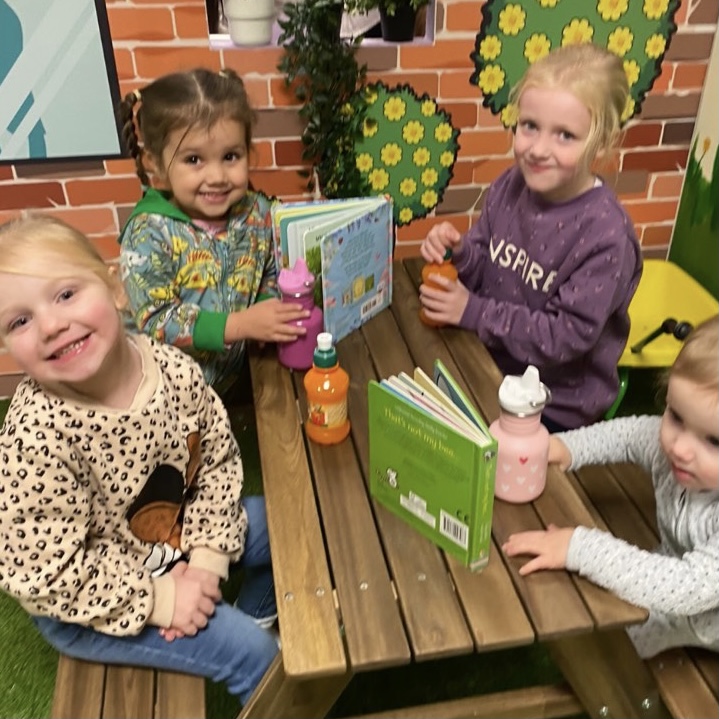
Engaging in pretend play supports a child’s social and emotional development and wellbeing. A child with Attention Deficit Hyperactivity Disorder (ADHD) may struggle to play socially due to their symptoms (e.g. waiting their turn). Role play can give children with ADHD the chance to express themselves, and with some adult guidance, help build relationships with other children. During a Tiny Town play session, children will get the opportunity to play and engage with others. This means children will have to come to an agreement and negotiate roles and rules between one another. This enhances a child’s co-operation and collaboration skills. Other valuable and transferable skills, such as teamwork, can be used when joining in role play activities.
Children will develop an awareness of other peoples opinions and feelings and become capable of looking from other perspectives. They will begin to display empathy for others as they explore and experiment with their own emotions. Role playing is a great way to expand a child’s self esteem and self awareness. This is because our Tiny Town play centre is a safe and secure place where a child can experiment and test boundaries, building their self confidence. It’s a great place for children to learn how to deal with their emotions positively, control their feelings and impulses and encourages good manners. This is incredibly helpful for children with Autism Spectrum Disorder as it allows them to self-regulate their emotions. Our Tiny Town role play centre is a place where children have a sense of freedom while playing, building their independence as well as teamwork skills as they play with others.
Physical Development
As well as cognitive and social benefits, role play centres also provide many opportunities for children to strengthen their physical development. Physical activity is an important part of a child’s development, enabling them to pursue happy, healthy and active lives. Gross and fine motor skills develop throughout early childhood. A child’s motor skills can be engaged during imaginative play at our Tiny Town role play centre.
Gross motor skills involve movements of the large muscles of the arms, legs, and torso.
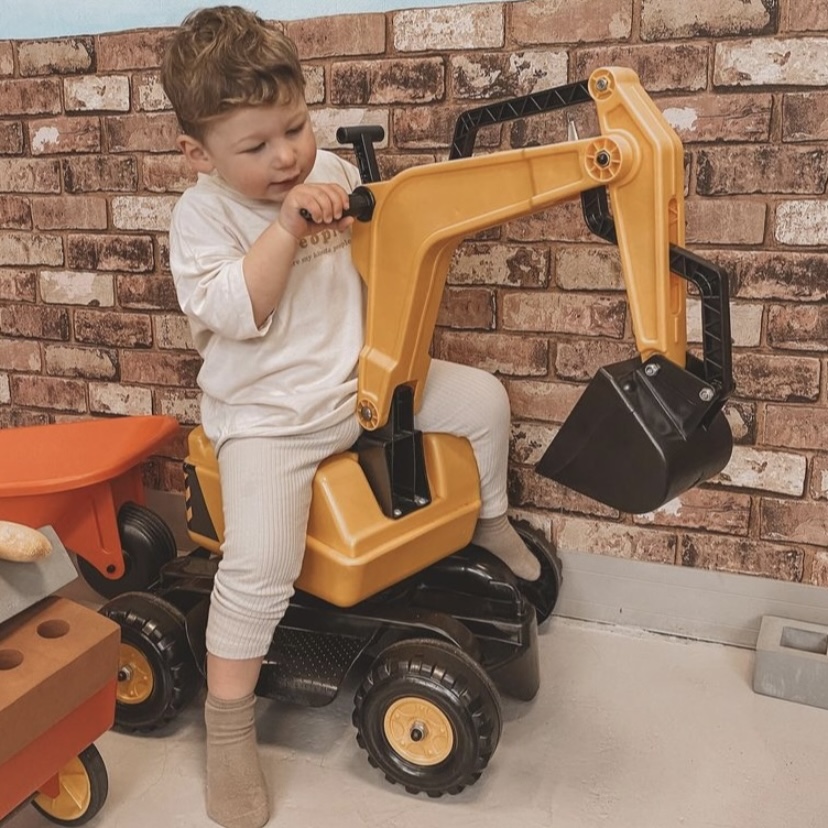
In our Tiny Town role play centre, we have lots of toys that can enhance a child’s gross motor skills. Children can use the small shopping trolleys or baby strollers to hold themselves up as they’re pushing them along. We also have vehicles such as ambulances and cars that children can sit on and push themselves around using their legs, further developing their physical skills.
Fine Motor skills are the ability to make movements using the small muscles in our hands and wrists. They are important for the development of muscles in a child’s hands and fingers and for improving hand-eye coordination. Toys in our Tiny Town role play centre, such as cooking utensils, gardening tools, makeup brushes, can all be grabbed and used by small hands – advancing a child’s fine motor skills. In our dressing up areas, clothes with zips and buttons can also be used to develop the fine motor skills. In the mini-market shop, children can hold baskets and fill them with different fruits, as well as stacking the tins on the shelves, improving coordination.
Communication and Language Skills
Speech, language and communication are important skills for children to develop. Children can improve language and vocabulary as they act out real life situations during role playing. While engaging in imaginative play at our Tiny Town role play centre, children will be exposed to new vocabulary based on the scenario they’re in. For example, if they’re playing in the shop – “trolley” “basket” “fruit” “vegetable”. The use of new words will allow children to gain confidence with their communication. The different role play areas we have at our Tiny Town play centre will give children the chance to widen their vocabulary further by using the appropriate words in the right context
Books are a great way to build on a child’s communication, language and comprehension skills as well as encourage conversations.At our Tiny Town role play centre we have created cosy reading areas with comfortable pillows, cushioned rugs and Useborne books. Reading frequently to children, and engaging them actively in stories will give children the opportunity to thrive through conversation, storytelling and role play. A child’s vocabulary will flourish as they take part in conversations about the books they have read and will learn to listen to others while taking turns in speaking.

SEND/Quiet sessions at Tiny Town
To ensure we maintain a calm learning environment, we limit the amount of people who can attend a play session at our Tiny Town play centre. This is why all visitors must be pre-booked before they visit our role play centre. You can book a place for a play sessions via our online booking system. At our Tiny Town play centre, our quietest play sessions generally run throughout the week, during term-time. Quieter sessions are a great way to let children explore Tiny Town at their own pace. There’s lots of room for little ones to grow and develop their confidence through role playing. After the school holidays we will be running dedicated quiet sessions, perfect for children with Special Educational Needs and Disabilities.
FAQs
Is Tiny Town suitable for a child with SEND?
Yes, our Tiny Town role play centre is a friendly and accommodating place. We are inclusive to children of all ages and abilities. This is because we believe that every child grows and develops at their own pace and everyone deserves the opportunity to grow and learn through play.
Is Tiny Town suitable for a child in a wheelchair?
Yes! At our Tiny Town role play centre we have car parking with disabled spaces, with direct wheelchair access to our main entrance. Our play area is spacious inside and is suitable for wheelchairs.
Do you run quieter sessions?
Our quietest play sessions generally run throughout the week at our Tiny Town Play Centre. Although every Tiny Town play session is nice and calm, quiet play sessions are a great way to let children explore Tiny Town at their own pace. There’s lots of room for letting little ones grow and develop their confidence through imaginative play. After the school holidays we are running quieter play sessions, perfect for children with SEND.
How do I book a play session?
To book a play session at our Tiny Town Play Centre, visit our online booking system and select which venue you want to visit!
Is the play centre secure?
Our Tiny Town Play Centre is a safe and secure space. Everything is really close by. Meaning adults can sit back, relax and enjoy a coffee while their little ones play, whilst still being able to keep an eye on them no matter where they are. Children will feel comfortable knowing their parents/guardians are never far away and can locate them easily. Our main door is remained shut throughout the duration of your play session.
Customer Feedback
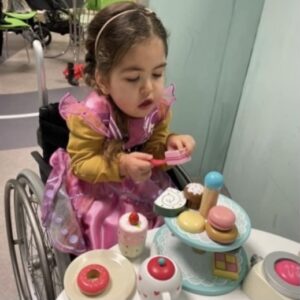
“I visited today with my daughter & she had the best time! Grace is wheelchair dependant and we really struggle to find places that are accessible and inclusive but Tiny Town is just perfect for her. It was lovely watching her having some independence & freedom to play with her friends , just like any 3 year old would. We will definitely be back. Thank you!”
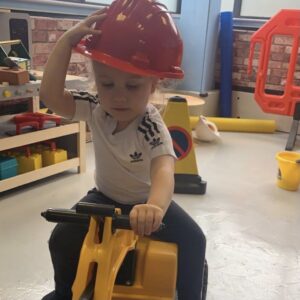
“My daughter who is 3 years old and has autism absolutely loves coming here. It’s such a good place for a mum to relax, knowing that my daughter is having the time of her life! If she does get upset she knows where I am and can find me quickly as the lay out of the areas are all in a close and secure environment.”

To enquire about Tiny Town email hello@tinytownuk.co.uk or use our contact form